
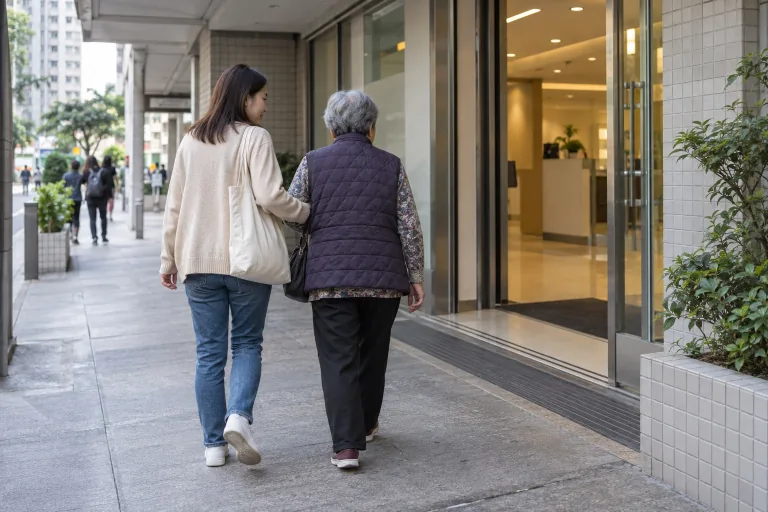
Agree what the companion will do
Ask the person whether they want help finding the location, taking notes, remembering questions or simply having someone nearby. Agree what may be shared with other relatives. Let the person speak first where possible and distinguish their views from a companion’s observations.
Name a main companion, backup contact and person meeting the return journey. If enquiring about an accompaniment service, confirm the actual tasks, meeting point and contact arrangements. A general preparation guide does not establish what a particular provider has agreed to deliver.
Separate required items from items to confirm
Build the packing list from the appointment notice and the receiving organisation’s current instructions. Include the date, location, booking information, requested papers and usual personal outing items. Mark uncertain documents for confirmation rather than copying everything suggested by an extensive online checklist.
Keep originals in a recognisable folder and note who holds them. Elderly Health Service and Hospital Authority preparation resources provide further reading. Ask the appointment team about any specific test, food or medicine instructions; a companion should not invent or alter those arrangements.
Break the journey into handover points
Use five stages: leaving home, arrival, registration, consultation and return. Allow flexibility for finding the venue and waiting. If relatives will swap roles, name an exact meeting point and contact method instead of relying on a vague plan to find one another later.
When plans change, record the revised time, who provided the update and the next action. Tell the agreed family contact so others do not rely on an early screenshot. Travel and waiting estimates are planning aids, not promises about when an appointment will finish.
Prioritise three questions
Invite the person to choose three questions that matter most, then place other questions underneath. Leave space for answers and follow-up. If an explanation is unclear, ask for it in different words rather than turning a partial note into a conclusion about the person’s care.
Ask permission before recording or photographing a consultation. For eHealth information sharing, the person should use the official consent process according to their wishes. Companions should not borrow login details. Notes help the family check information later; they do not replace the healthcare team’s advice.
Separate supplied information from family actions
Afterwards, use three headings: written information from the team, points requiring clarification and administrative tasks for relatives. An unclear explanation belongs in the question column for the original service to confirm. It should not be settled by a vote in a family messaging group.
Review sharing preferences with the person and select one place to keep the current record. Add dates and sources, and mark superseded notes clearly. Before the next appointment, begin with unresolved questions and incomplete administrative actions rather than circulating an unstructured pile of older notes.
Your preparation checklist
- Agree the companion’s role
- Check the appointment team’s requirements
- Name journey stages and handover points
- Choose three priority questions
- Separate clinical information from family administration
Common questions
Should the companion answer every question?
Let the person express their views and provide the help they want. When adding information, identify it as an observation or a report from someone else. Say when something is uncertain so that a guess does not enter the notes as a confirmed fact.
Can the full appointment record go into a family group?
Agree the recipients and level of detail with the person first. Administrative updates can be shared separately from sensitive information. Avoid exchanging passwords or acting through another person’s eHealth login.
Official references
This guide helps families organise enquiries and records. Individual care needs and clinical instructions must be confirmed with the appropriate professional.
View all seven guides